I lead the creation of things that don’t exist yet.
Eighteen years across design agency and in-house product—brand identities, product ecosystems, and future-state experiences from the ground up, then shipped at scale.
About
I've spent eighteen years at the intersection of two design worlds that usually live apart: the agency side, where the work is pitching, scoping, and earning client trust—and the in-house side, where the work is shipping at production scale to millions of people.
Most of that time has been at Designworks—an independent design agency founded in 1972, acquired by BMW Group in 1995, structurally similar to frog or IDEO. Roughly half my work is external client engagements; the other half is BMW Group internal product, where Designworks still pitches and competes against outside agencies. Before Designworks, I ran my own consultancy with clients like Intel, Nikon, Panasonic, SAP, Hitachi, Fisker, the FTC.
The work has shipped across automotive (BMW M, MINI, three generations of Rolls-Royce, BMW Motorcycles), aviation (in-flight entertainment, integrated flight deck, companion apps), marine (Mercury Marine helm and on-device controls), consumer electronics, and civic infrastructure (1,000+ smart bus shelters for the City of Los Angeles). Five U.S. patents in adaptive interfaces and vehicle interaction design.
I'm most energized when I'm standing something new up—a capability, a platform, a design language, a team—and building it to the point where it ships and scales.
Leadership
Cross-disciplinary teams of 20–50+ across design, engineering, software, and fabrication. R&D-to-production pipeline management. Executive sell-in and board-level storytelling for CMOs, CTOs, and boards of directors.
Domains
AI-powered design and generative tools. Autonomous mobility and connected vehicle experiences. Brand experience development. Multi-modal and conversational interfaces. Data-informed personalization.
Methods
Full-stack UX across digital and physical. Real-time and interactive content. Physical computing and prototyping. Design systems and brand language development. Technology strategy and evaluation.
Industries Shipped To
Automotive · Aviation · Marine · Consumer Electronics · Civic Infrastructure
Selected Work
MyBMW & MINI App Platforms
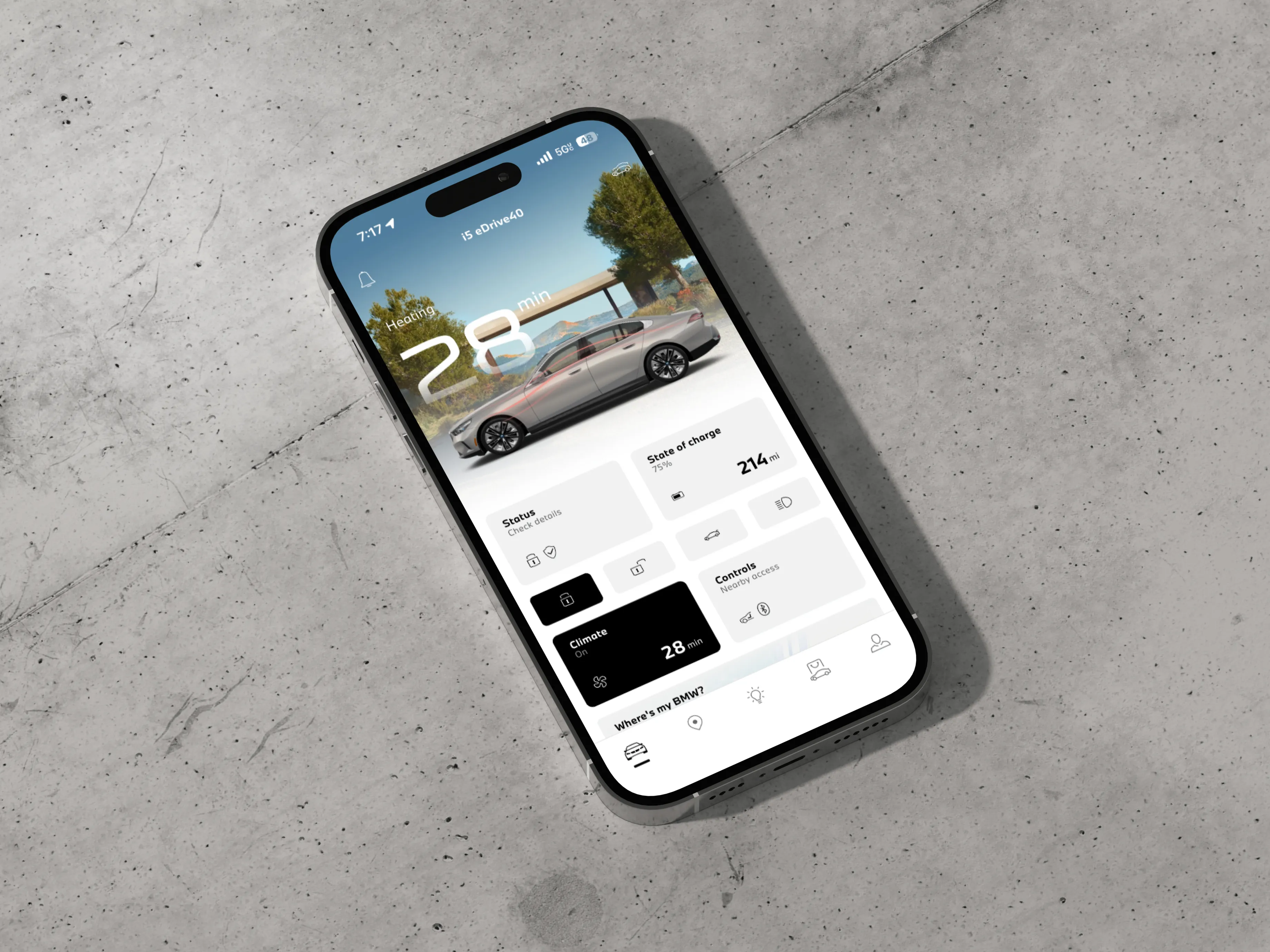
Long before “super app” became a category, the question at BMW was simpler: could the MyBMW and MINI companion apps share one platform while still feeling like two distinct brands? In 2016 I guided the team that shaped the early UX strategy that answered it—a shared core with brand-differentiated features layered on top.
That thinking carried into the relaunch of the MyBMW app, the connective tissue between driver and vehicle for millions of customers. The new experience contributed to lifting the App Store rating from 2.0 to 4.9.
Most recently I directed a two-track program. The app had drifted from how people actually use it, accumulating bolted-on features across years of EV and connected-service additions. Track one: a focused, US-first streamline of the primary interface—now in production and in customers’ hands. Track two: a three-to-five-year vision for where the platform goes next, integrating AI, smart home, and a broader connected ecosystem.
Designworks AI Innovation Program
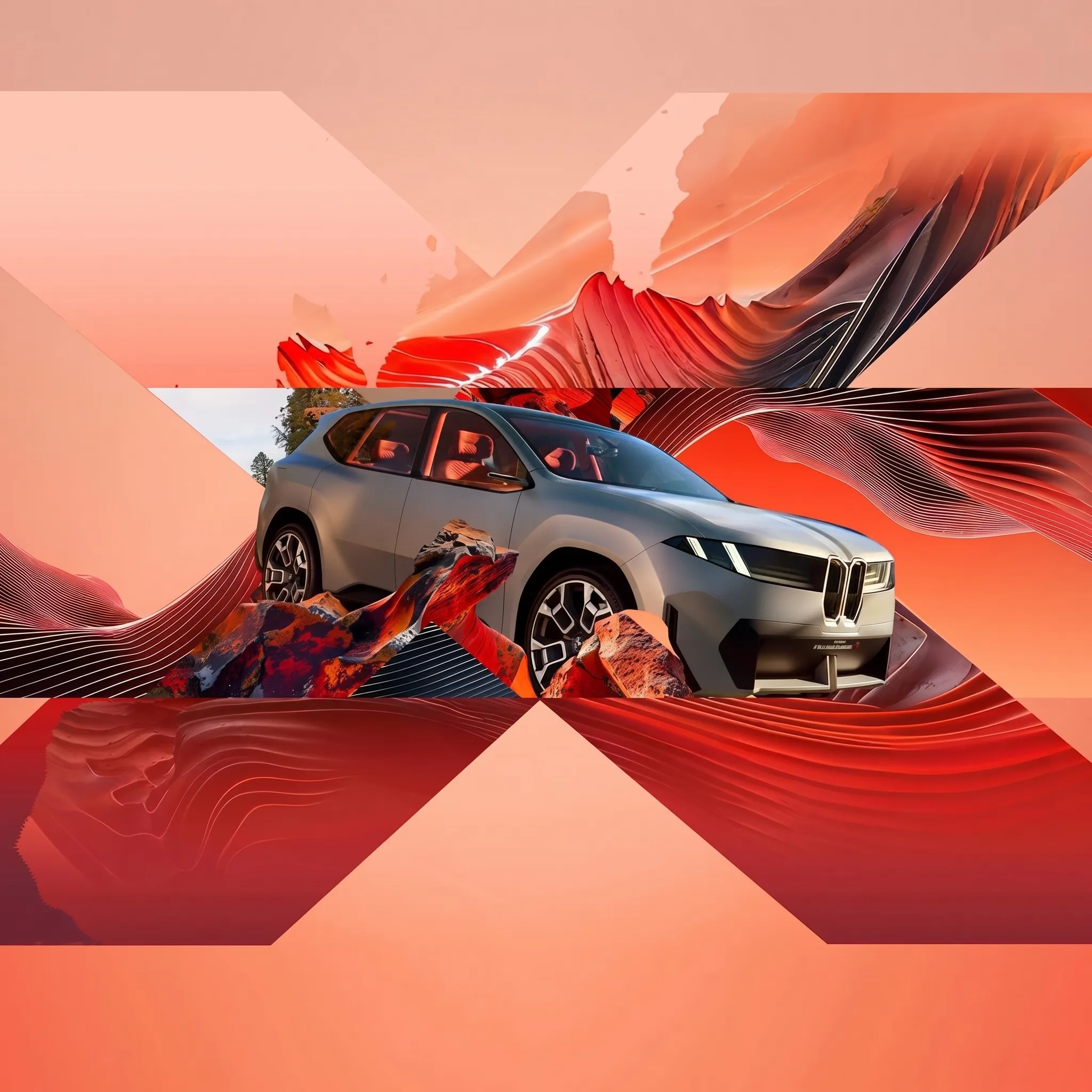
Designworks made a deliberate choice to build with AI rather than simply adopt it—to be a creator of AI capability, not just a user of it. I founded and lead the program behind that stance: a portfolio of internal platforms, applied prototypes, and enablement infrastructure now in use across our global studios.
The work spans several tracks: platforms that streamline how AI-powered experiences are developed, applied research into environments that sense and respond to the people inside them, and generative tools that let designers explore and visualize concepts in their own style at dramatically higher velocity. Some of it builds directly on the adaptive-interface thinking behind my patents and earlier autonomous-mobility concepts.
Underneath the visible work sits the part that makes adoption real—the infrastructure, evaluation practices, and documentation that turn individual experiments into shared studio practice across teams.
Much of this work remains under NDA.
BMW M Digital Brand Identity
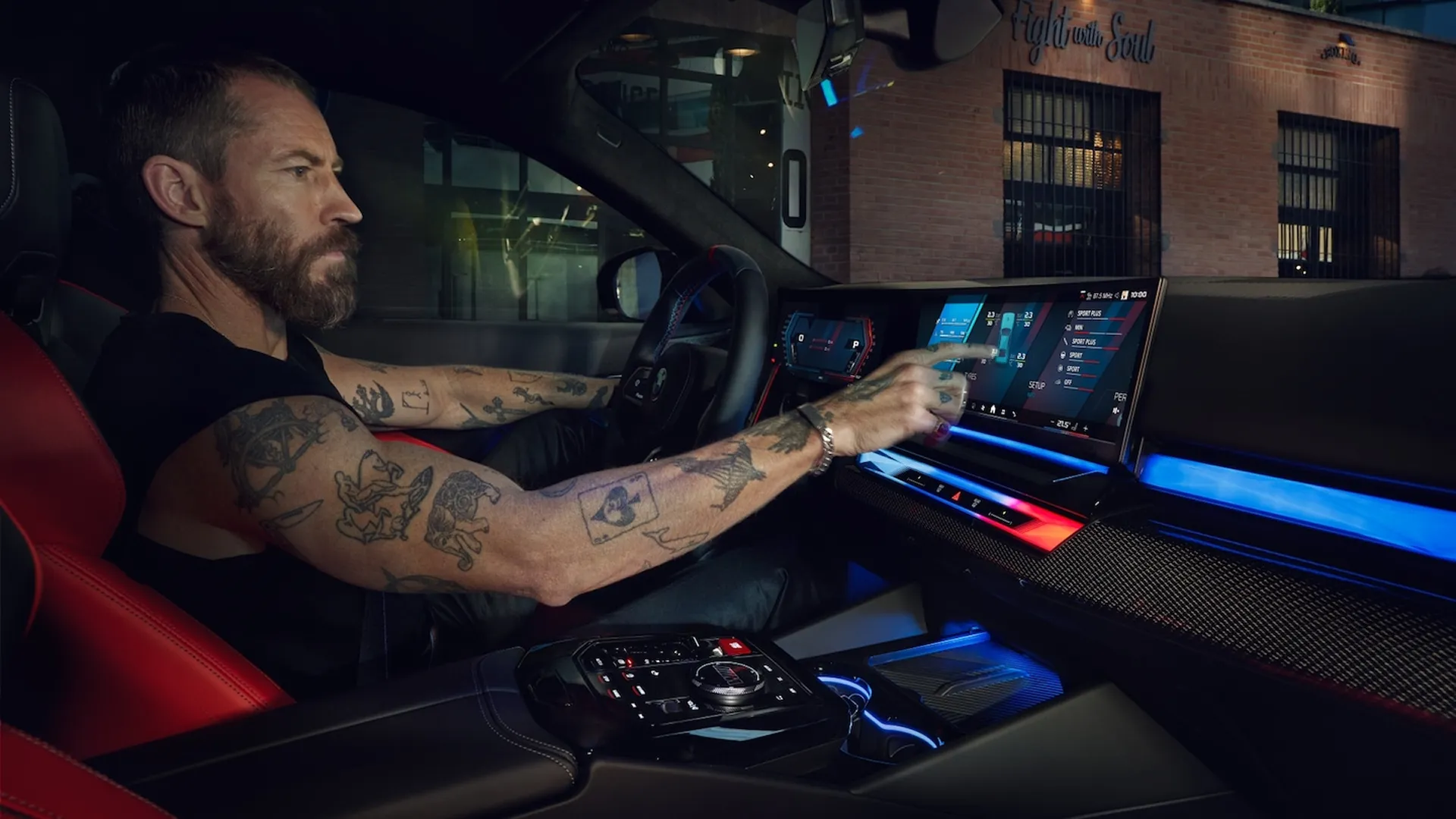
Before this project, every BMW M interface was essentially the standard BMW system with minor typographic variations. There was no distinct digital brand language for M.
I led the creation of an entirely new digital identity from the ground up: a custom instrument cluster with performance-focused gauges and widget functionality, a dedicated track mode, and a motion design language tailored to driving enthusiasts. We incorporated direct feedback from M Performance Center trainers and professional drivers into gauge behaviors and interface logic.
I also led the strategic evaluation of button reduction for the M brand. While BMW was trending toward fewer physical controls, we concluded that M-specific tactile controls were essential for high-performance driving—and developed a strategy for harmonizing physical buttons with the new touchscreen interface.
BMW i Inside Future & Interaction EASE
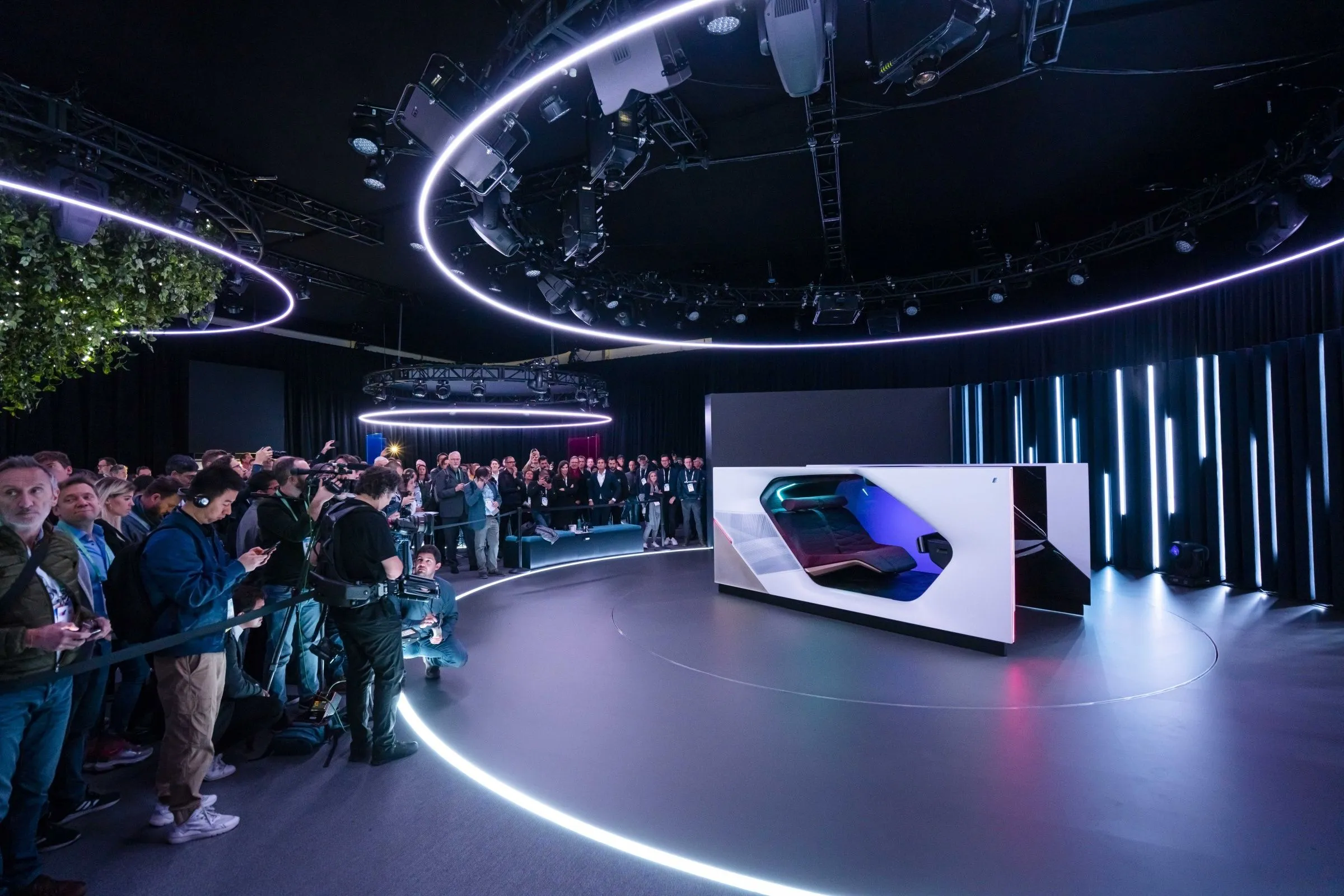
Two connected initiatives exploring the future of autonomous mobility. BMW i Inside Future (team of 30) demonstrated how Level 3 autonomy could transform the in-vehicle experience—health and wellness integration, entertainment, personal sound zones, a seamless dashboard display, and a floating holographic interface with haptics.
The concept’s success led BMW to fund a larger follow-up: Interaction EASE (team of 50), where I directed a global effort to envision on-demand mobility without vehicle ownership or steering wheels. How should an interior work when anyone can get in and the car drives itself?
Multiple technologies from these concepts made it to production. The rear-seat display system evolved into the Theater Display now in the BMW 7 Series. The seamless dashboard display work contributed to the development of BMW’s Panoramic Head-Up Display—a full-windshield augmented reality system launching across the BMW lineup starting in 2026.
Los Angeles Street Transit Amenities Program
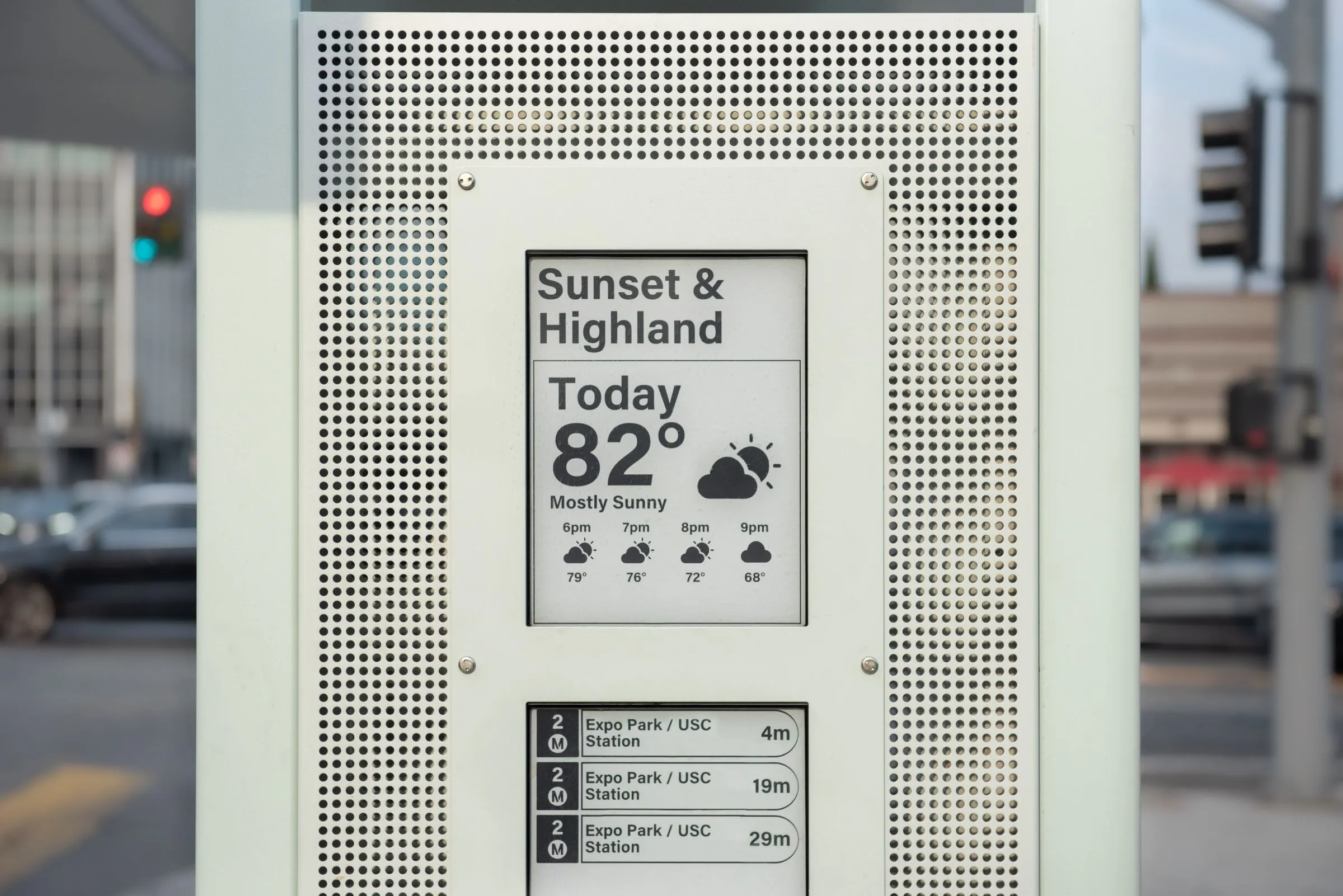
The City of Los Angeles set out to redesign its entire bus shelter network—over a thousand shelters—to improve the rider experience and prepare for the 2028 Olympics. Working with a consortium of local companies, my team led the experience and product design side of the program.
We defined what riders actually need from a shelter, designed ADA-compliant digital interactions, and specified the full hardware architecture: computing, e-ink displays, data connectivity, and dynamic lighting. Beyond the shelter itself, we developed the visual brand language, a companion mobile application, the content strategy for real-time transit information and community messaging, and the CMS that allows the city to manage all of it at scale.
MINI Interaction Unit
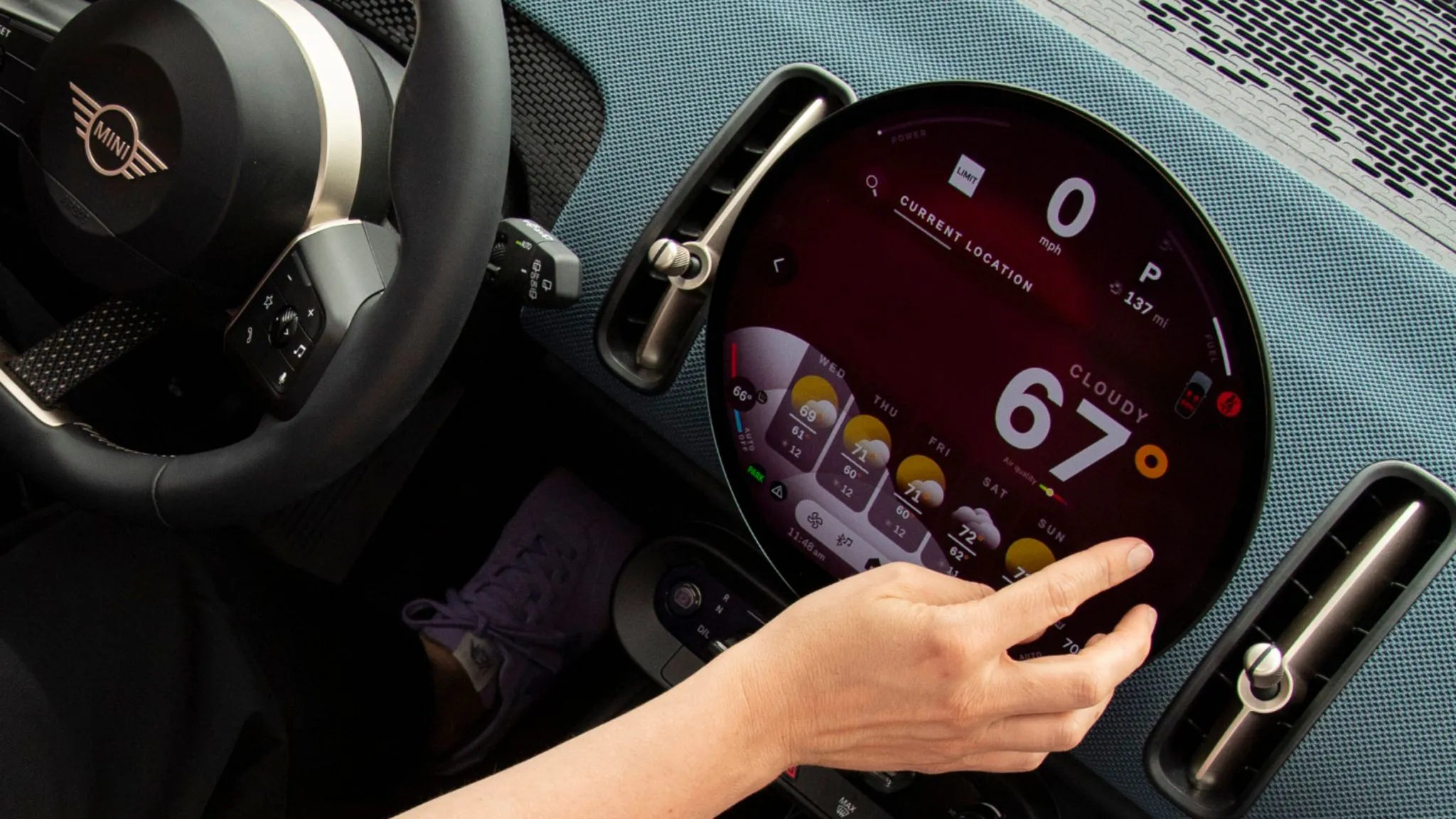
I led UX principles definition and brand differentiation for MINI’s groundbreaking round OLED display—a form factor with no precedent in automotive. The challenge was defining how customers should interact with a circular interface and what makes it distinctly MINI.
I directed the sell-in to BMW management and the board of directors, establishing the design language, tone, and interaction behaviors for the new display. Beyond the screen, I led efforts to define digital touchpoints across the entire MINI platform: exterior lighting, interior projection, custom themes, and driver experience modes.
Intel & Warner Bros: Batman Experience
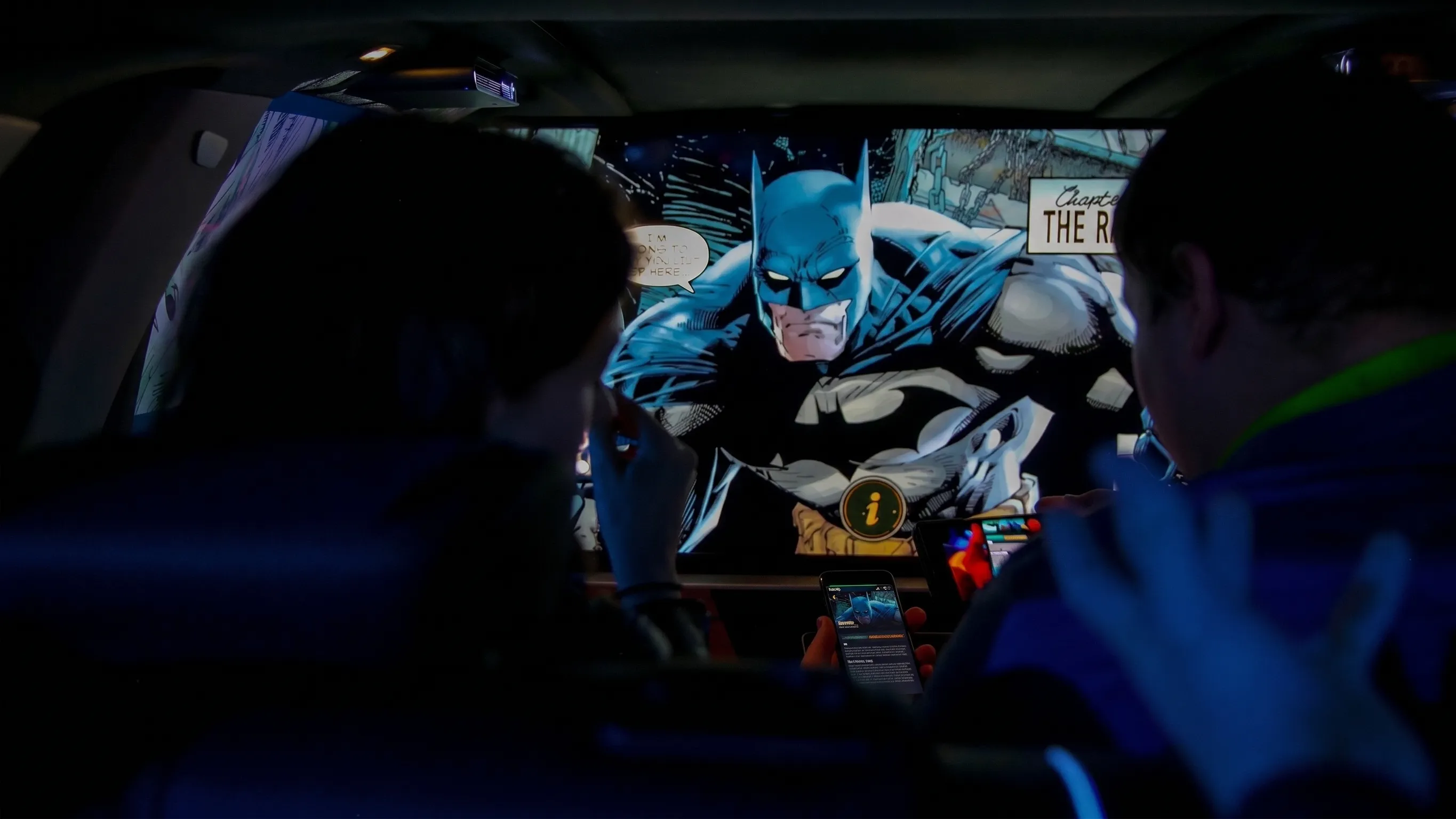
Intel and Warner Bros. had committed at the 2017 LA Auto Show to explore what entertainment looks like once passengers are uncoupled from the steering wheel. Two years later, we delivered the answer at CES 2019: a retrofitted BMW X5 that transported riders into Gotham City, moderated by Alfred Pennyworth as the in-cabin AI guide.
Working with Intel, Warner Bros., and DC Comics on a tight budget, I directed the integration of an iconic entertainment IP into an autonomous ride-share platform—coordinating storytelling, editorial decisions, engineering constraints, and multimodal interface development across a diverse creative team. The cabin combined a large-format display, projectors, immersive audio, dynamic lighting, and haptic feedback into a single 270-degree environment.
The experience was structured as five narrative chapters: a welcome and Gotham reveal, an interactive comic-book reader with Batman and Killer Croc, a live demonstration of Intel’s Responsibility-Sensitive Safety (RSS) framework, an in-cabin movie preview adapted for 270-degree viewing, and a guided arrival sequence. The throughline was a thesis Intel and Warner Bros. wanted to test publicly: that compelling, character-led content isn’t just entertainment in an autonomous vehicle—it’s how you build the passenger trust the entire category depends on.
Dimensions of Real
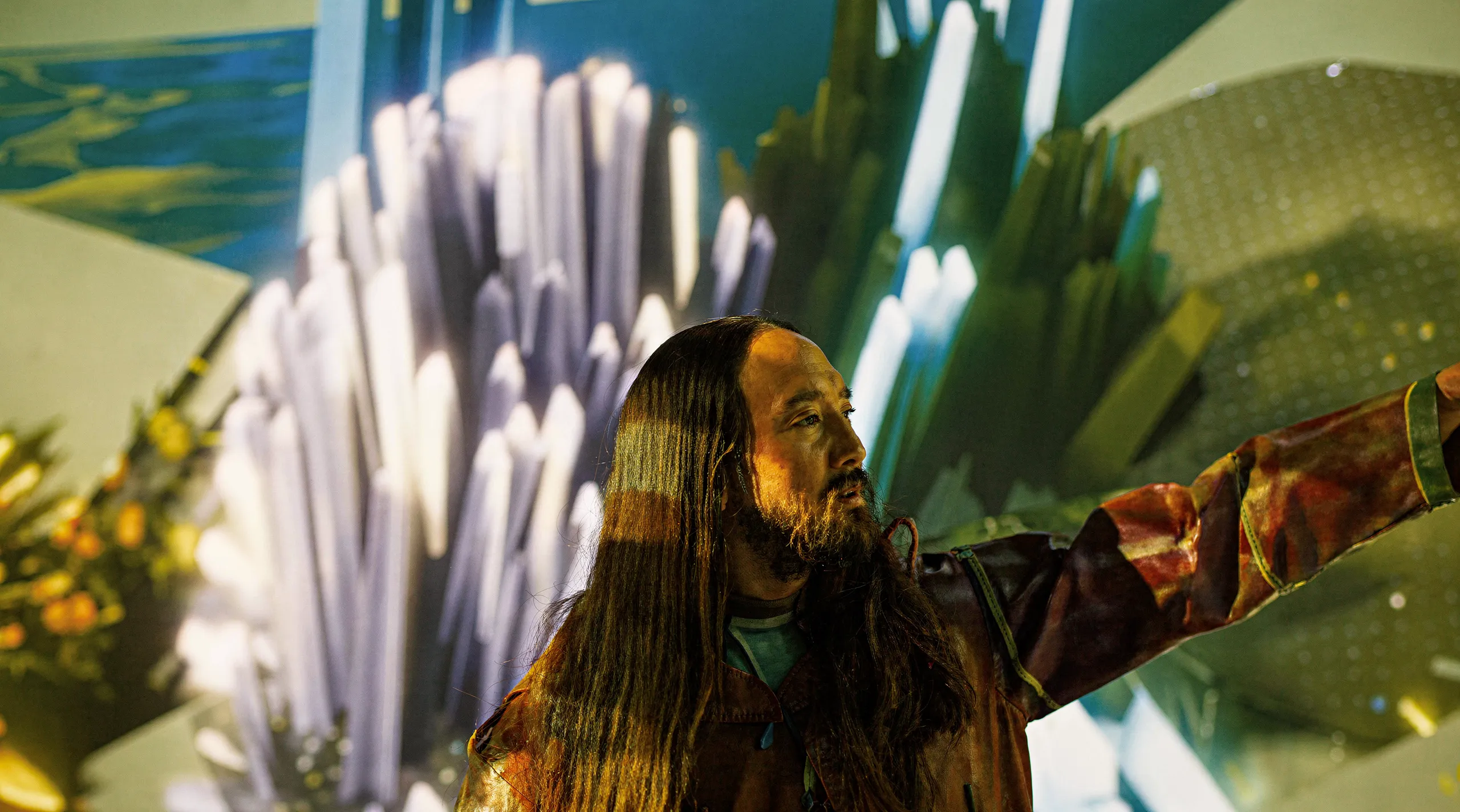
BMW’s Experience Modes transform how an iDrive 8 vehicle feels—light, sound, content, and atmosphere shifting together around the driver. Our challenge at CES: communicate that transformation with no car on the floor. The answer was to make the visitor the driver and the building the vehicle.
Working with our technology partners, my team designed immersive environments rendered in real time at monumental scale—spaces that sensed visitors and responded to their movement, shifting mood and atmosphere around them the way an Experience Mode shifts a cabin. Instead of explaining a feature, we built a place where people stood inside it.
The project compressed a full experiential pipeline into a trade-show timeline: narrative design, real-time content development, interactive sensing, and show integration, delivered to an audience of thousands over the run of the show.
Recognition
Awards
- DMI Design Value Award — STAP 2025
- Fast Company World Changing Ideas — STAP 2025
- iF Design Award — All-electric MINI Cooper 2024
- Interior Design Best of Year: Outdoor Space – STAP 2024
- Good Design Award — Mercury Marine Avator 2023
- iF Design Award — Mercury Marine Avator 2023
- iF Design Award — BMW i Interaction EASE 2021
- iF Design Award — BMW i Inside Future 2018
- IDZ: UX Design Award — BMW i Inside Future 2017
- Red Dot: Best of the Best — BMW i Inside Future 2017
- Auto Test Sieger: Award for Connectivity — BMW i8 Spyder Concept 2016
- Good Design Award — Dacor Discovery iQ 2014
- Good Design Award — BMW i Wallbox Pro 2014
- IxDA Interaction Awards: People's Choice — SAP Scouting 2014
- KBIS: Best in Show — Dacor Discovery iQ 2014
- Thea Award: Outstanding Achievement — ICP Pavilion 2011
- CTAM Gold Award: Shoestring Marketing — COX Oklahoma 2010
Patents
- Adaptive Personal Object Holder US10953781B2
- Vehicle Velocity Indicator US10962562B2
- Tactile Temperature Control US11075332B2
- Dynamic Touch User Interface US11281316B2
- Dynamic Ergonomic Surface US11524607B2
Education
- Art Center College of Design, Pasadena BFA, 2007